
Arancini Siciliani
Crunchy, golden, and filled with debate.

What’s in a name? In Sicily is everything. A single vowel (o or a) can start arguments fiercer than football matches. But once that first bite cracks, nobody’s fighting anymore.
The first time I made arancini, I was overconfident. I’d simmered a ragù all afternoon with pork, beef, vegetables melting into something I knew would make the filling unforgettable. I folded in peas and cheese proud of myself already. Then came shaping time, and that’s when Sicily fought back: too thin and the rice cracked, too thick and there wasn’t enough filling. That’s when I learned what every Sicilian already knows: balance is everything.
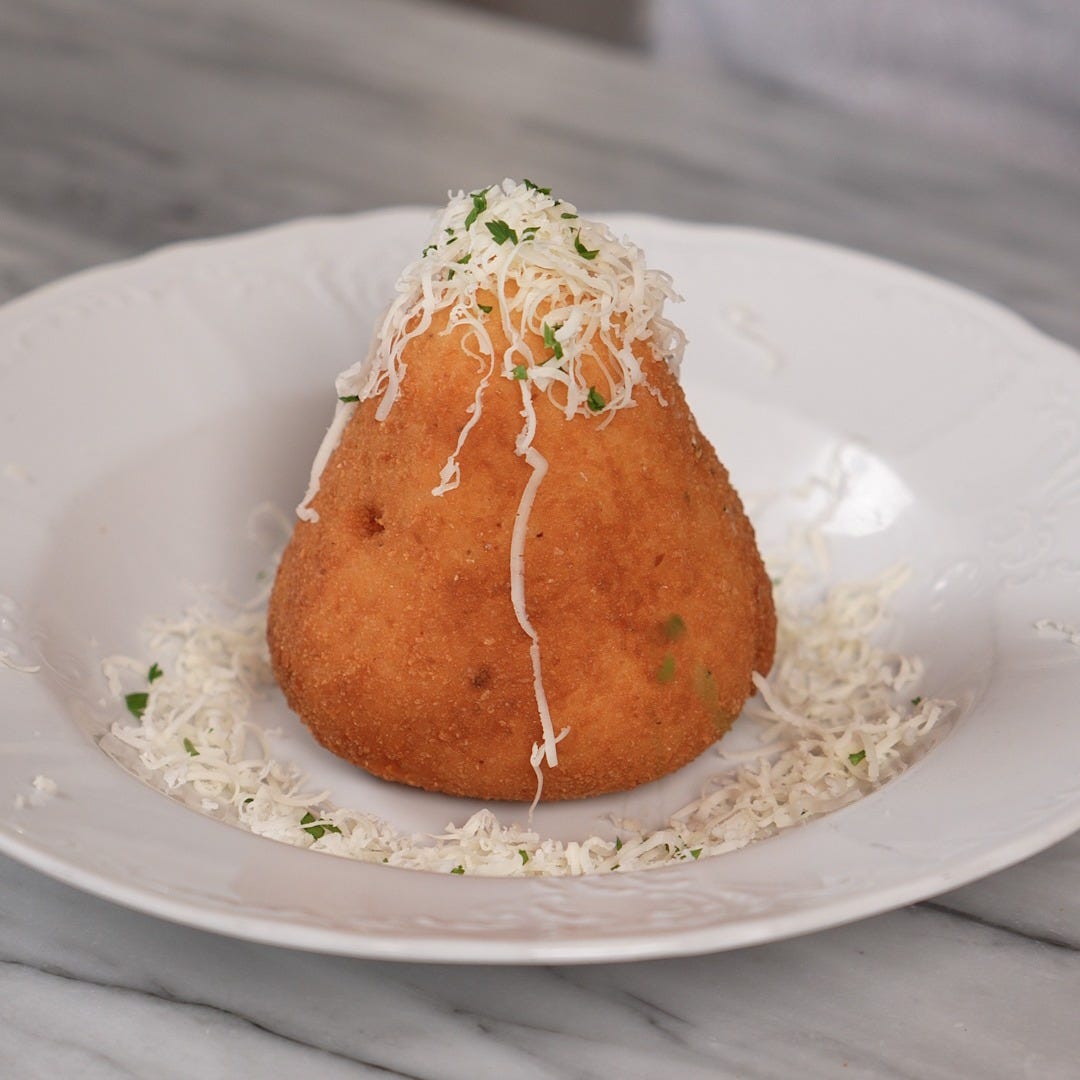
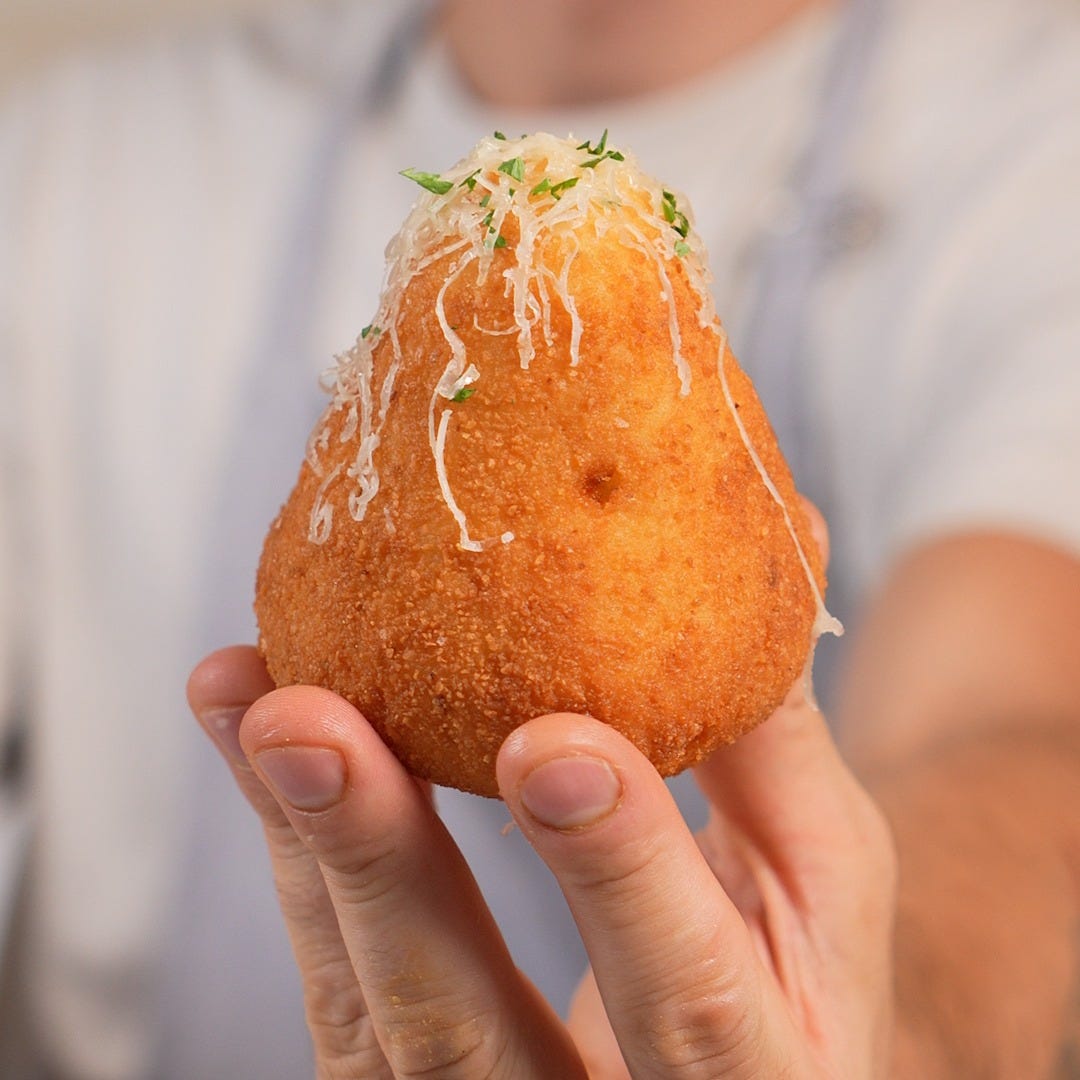
To keep them lighter, I skipped the pastella and used only egg and breadcrumbs. The crunch was perfect, but next time I’ll load them with more filling so they burst with sauce when opened. I sprinkled parsley on top, that is not traditional, but it tied in with the filling and promised myself I’d try Palermo’s round version next time. Shaping them was still a challenge, but I later found one trick I’ll keep in mind next time: spreading the rice thin on a tray while it cools because it makes the grains stick just enough to hold their shape later.
When the arancini hit the oil, the sound said everything: a hiss, then that golden crackle that tells you it’s working. Beyond the rice and ragù, what struck me most was how much of Sicily lives inside these little cones. Arancini aren’t just snacks, they’re rivalry, pride, and family you can hold in your hand. Every bite carries a piece of the island (Palermo and Catania, Etna and Santa Lucia) all wrapped in one crisp, glowing shell.
Serves: 10–12
Time: About 2½ hours (plus cooling)
Difficulty: Medium
Region: Sicily
Season: All year
Ingredients
For the rice
500 g short-grain rice (originario if possible)
1 L water
65 g aged provola or caciocavallo, grated
50 g butter
2 eggs
2 g saffron
Salt and pepper
For the ragù filling
300 g ground beef
200 g ground pork
400 g tomato passata
1 carrot, 1 celery stalk, 1 onion (for soffritto)
25 g olive oil + 25 g butter
1 tbsp tomato paste
1 L beef broth
200 ml milk
Salt, pepper, red wine
For the final filling
500 g ragù
100 g fresh goat cheese (toma di capra), cubed
65 g provola or caciocavallo, grated
100 g peas
1 small onion, chopped
Olive oil, parsley, saffron
For coating and frying
2–3 eggs
Olive oil
Breadcrumbs
Frying oil or lard
Black pepper
Method
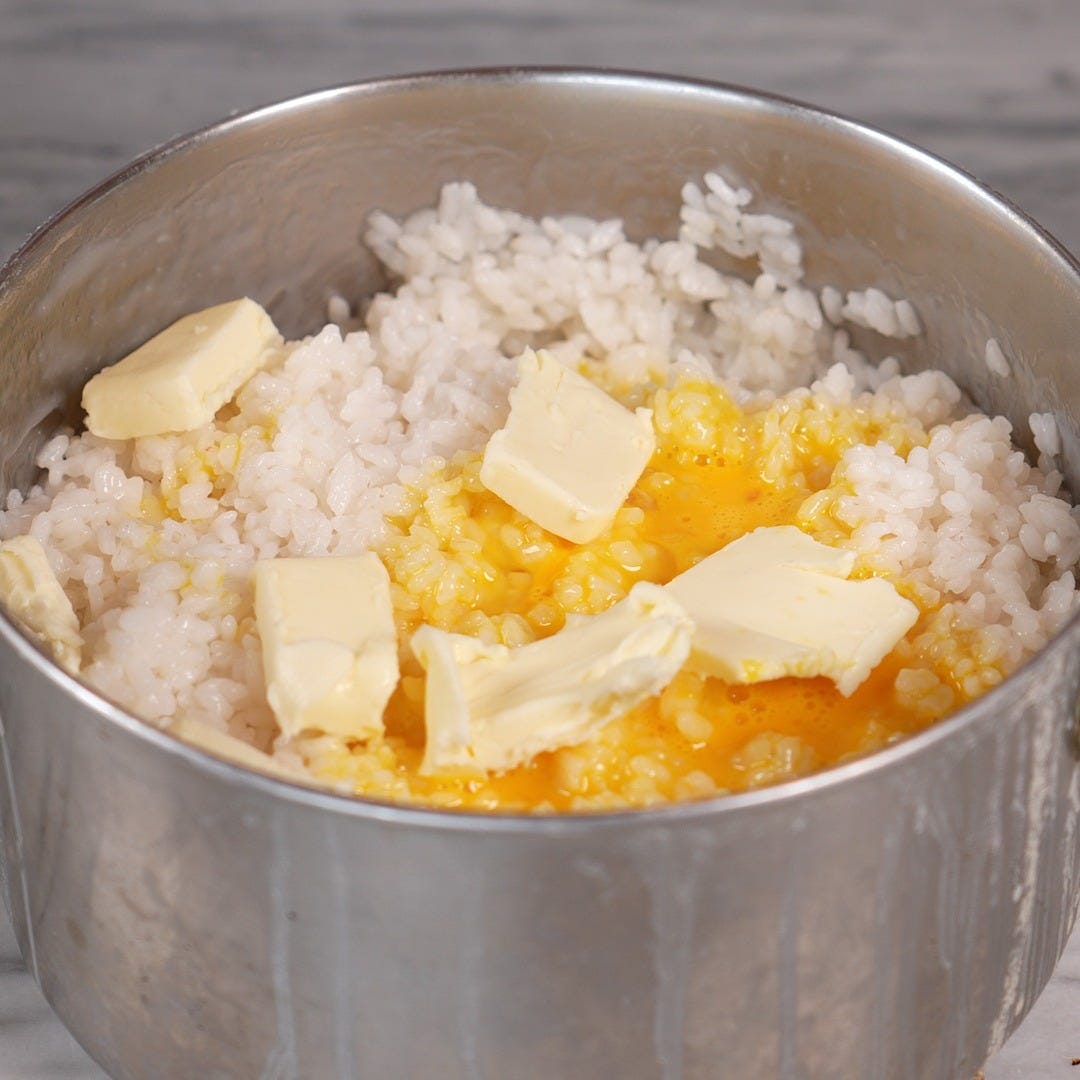
Cook the rice in salted water with saffron until all the liquid is gone, about 14 minutes. Keep the heat steady and stir now and then so it doesn’t stick. When done, mix in butter, grated cheese, and eggs while still warm. Spread it on a tray to cool, so it firms up.
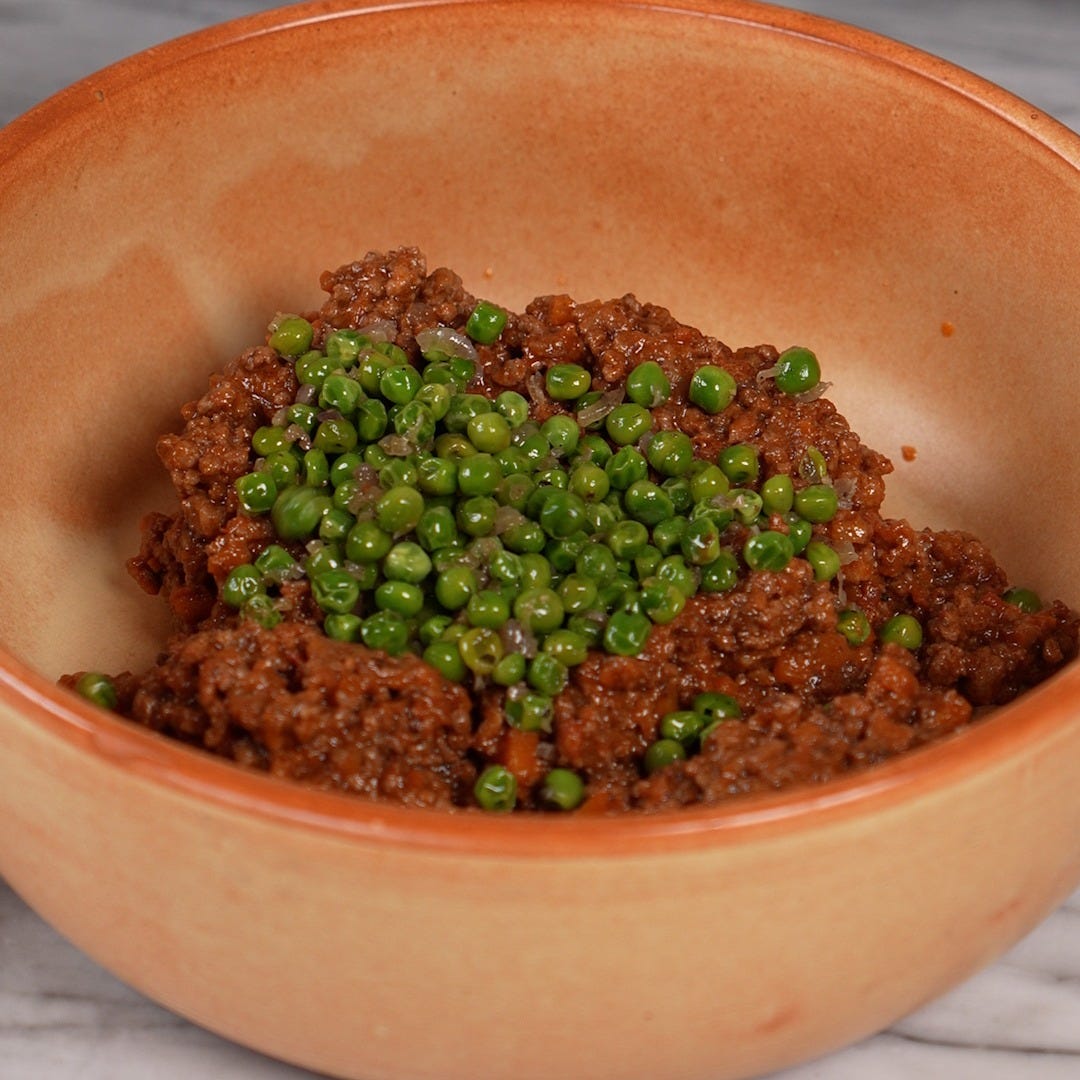
In a small pan, cook the peas with onion, olive oil, and a splash of white wine. Season lightly with salt and pepper. Let them soften, then set aside to cool.
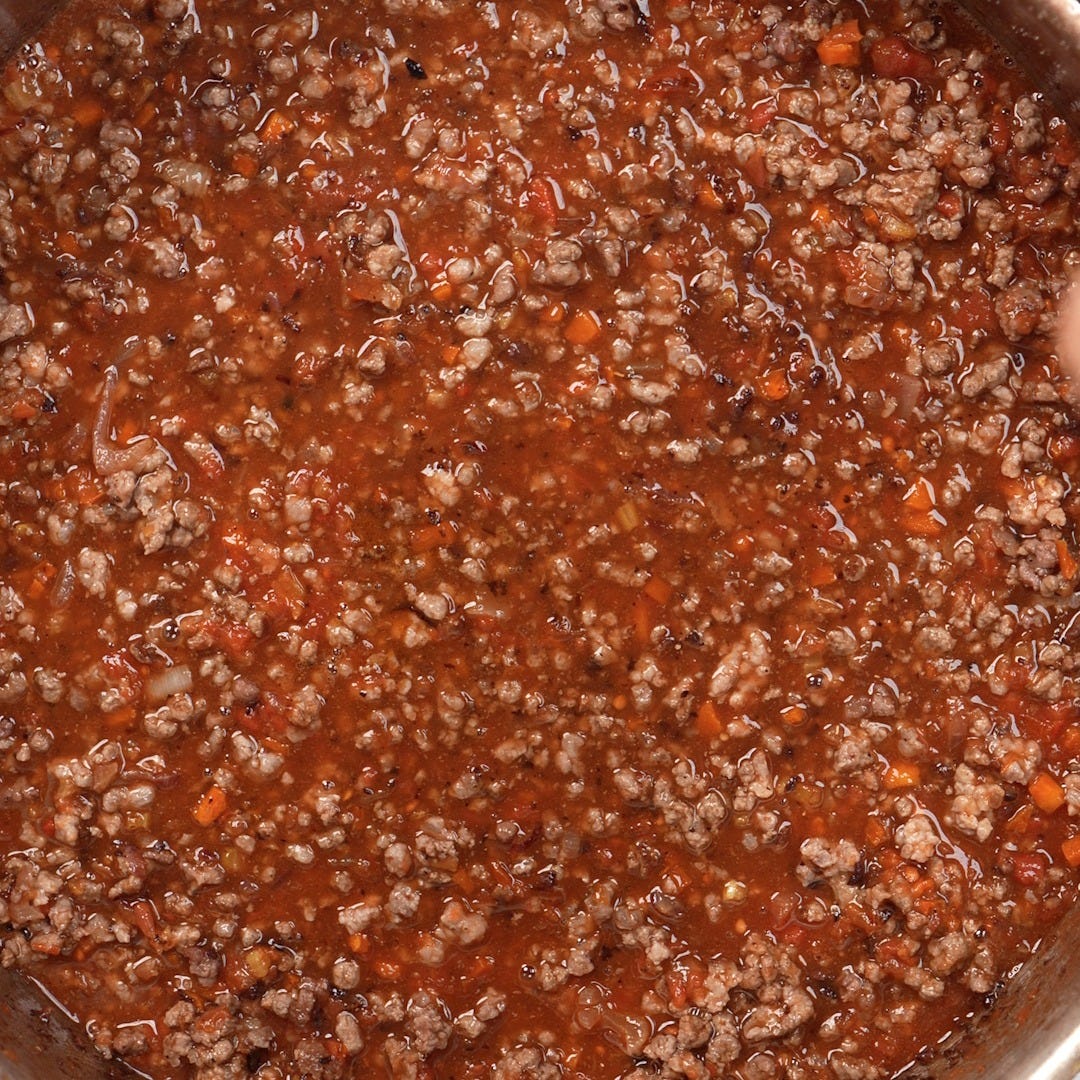
For the ragù, start with a soffritto of carrot, celery, and onion in butter and olive oil. Remove the vegetables and keep them aside. In the same pan, brown the beef and pork well. Deglaze with a splash of red wine, then add tomato paste, passata, broth, and the reserved vegetables. Simmer gently for 1½ hours, stirring sometimes. Add the milk at the end to round the flavor.
Mix the ragù with peas, cubed goat cheese, grated provola, parsley, and a pinch of saffron. Let the filling cool before shaping.
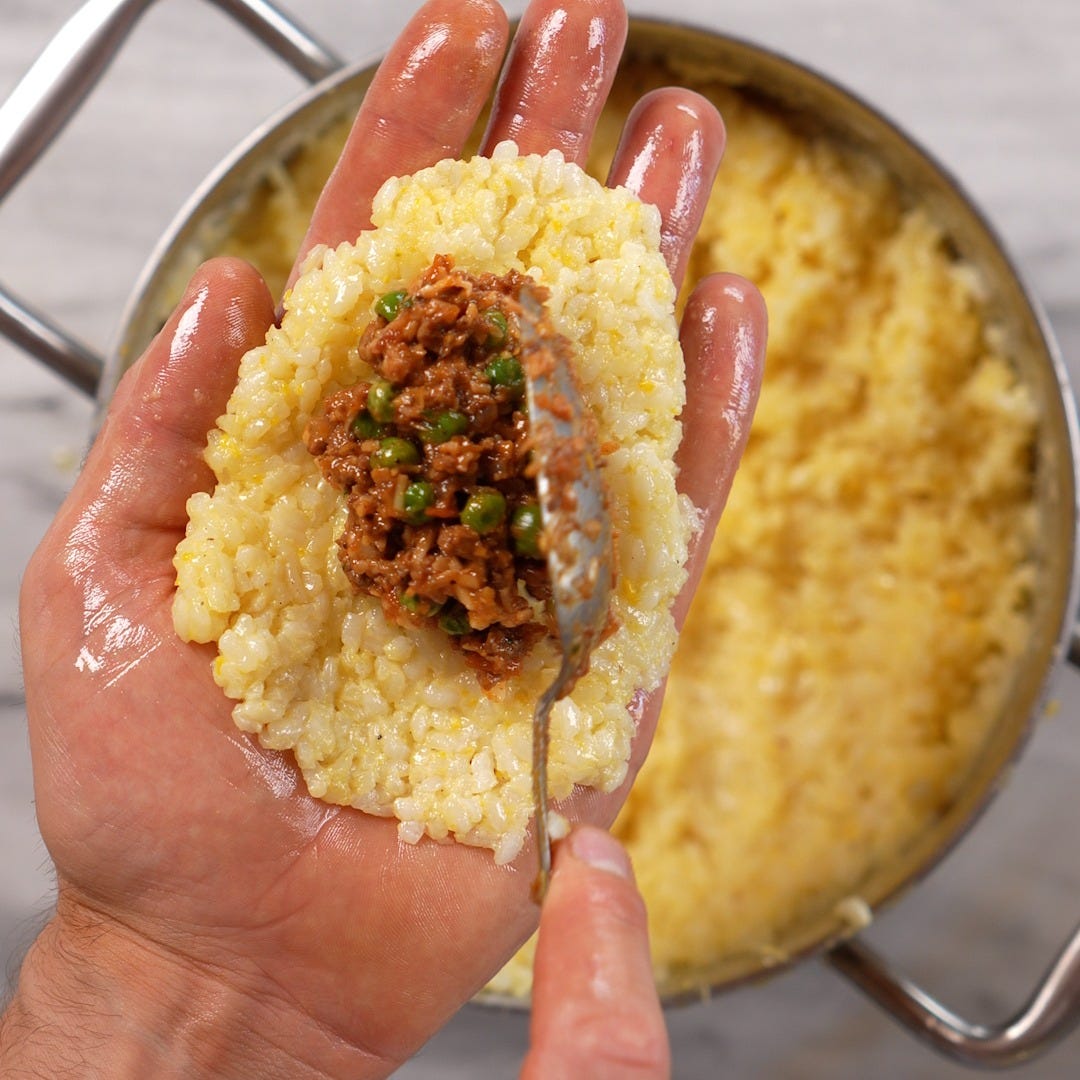
Take a scoop of rice in your hand, flatten it, and add a spoon of filling in the center. Close with more rice, shaping it into a ball or cone. Keep your hands damp to stop sticking.
Beat the eggs with a little olive oil and black pepper. Dip each arancino in the egg, then roll in breadcrumbs. For extra crunch, repeat the breading twice.
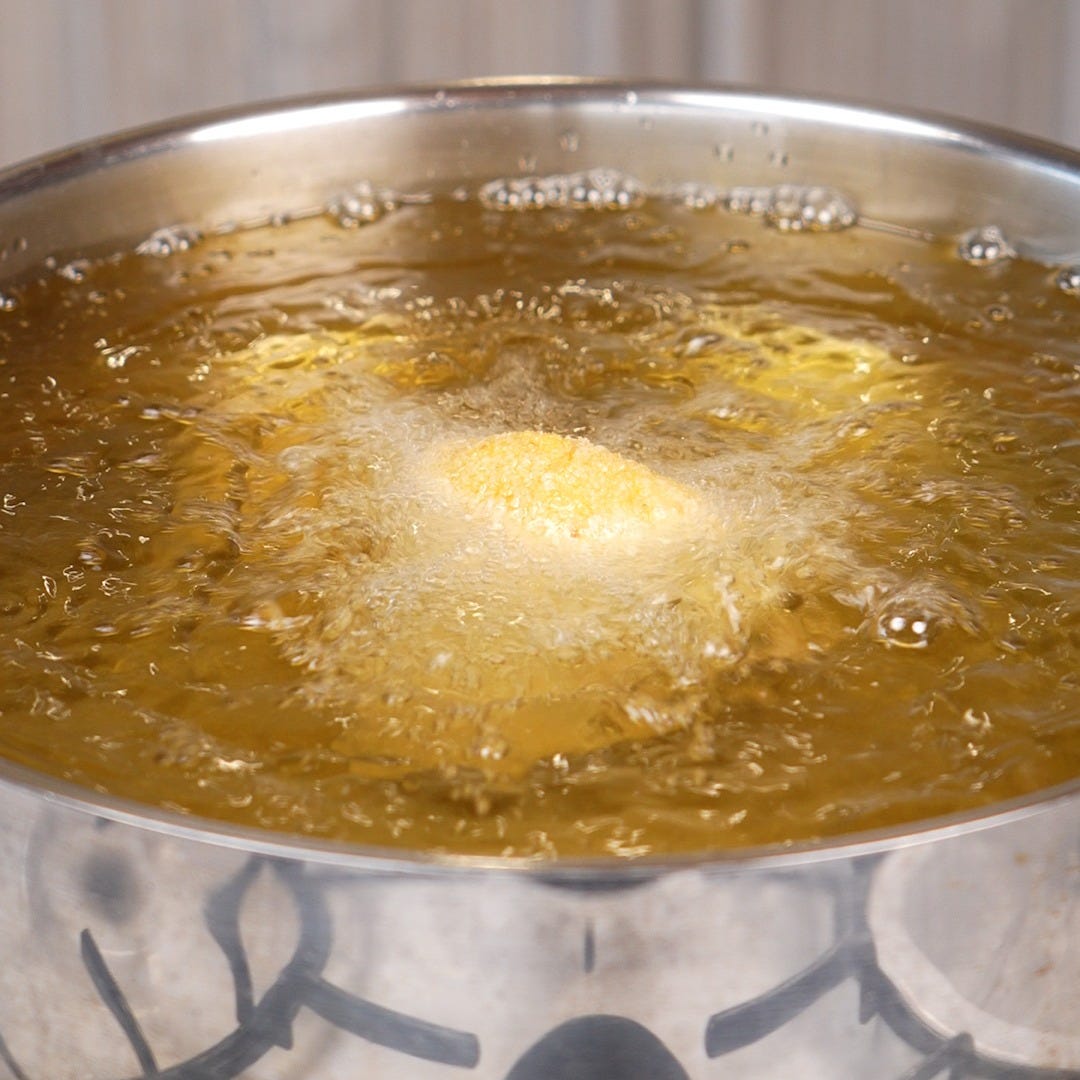
Heat frying oil or lard to 170 °C (340 °F). Fry a few at a time, turning so they cook evenly, until golden and crisp outside. Drain on paper towels and serve hot.
From My Kitchen to Yours
I can say by experience that what makes arancini special isn’t just the crisp shell: it’s how every part has a job. The rice needs to rest and firm up wile the eggs act like glue; the double breading keeps everything sealed. A slow thick ragù gives you a filling that’s rich but never runny so once you get all those pieces right, you’ll hear that quiet crackle and know it’s working.
Short-grain rice is the traditional ingredient because it sticks gently without turning heavy. Caciocavallo gives sharpness wile provola melts smoothly, and saffron does more than color: it ties Sicily’s history to every grain.
If you rush the cooling or skip the double breading, they’ll break or soak up oil. Let the rice cool flat, keep the filling cold, and test your oil temperature with one small piece first. That patience pays off when the first one comes out perfectly golden.
I like to change things sometimes adding pistachio cream or eggplant like the alla Norma version. If I have leftovers (very rare) I reheat them in the oven at 180 °C (350 °F) so they stay crisp.
In Palermo, arancini are round for Santa Lucia wile in Catania, they rise like Etna, proud and tall. However you shape them, eat them hot and standing up, just like on Sicilian streets. That’s where they belong, as food for the hands and the heart.
For wine, my choice is Nero d’Avola when I want warmth because its soft tannins and fruit suit the ragù. Etna Rosso brings something brighter, volcanic and fresh, perfect with saffron and fried crust.
I would say arancini are one of the best fried rice balls i have tried in my life, and how a small region like Sicily has such a fierce fight for a name, explain how deep food tradition is in Italy. Im sure you can take something help full home from this amazing dish, maybe giving it also a chanche in your kitchen
Thanks for reading,’
- Massimo