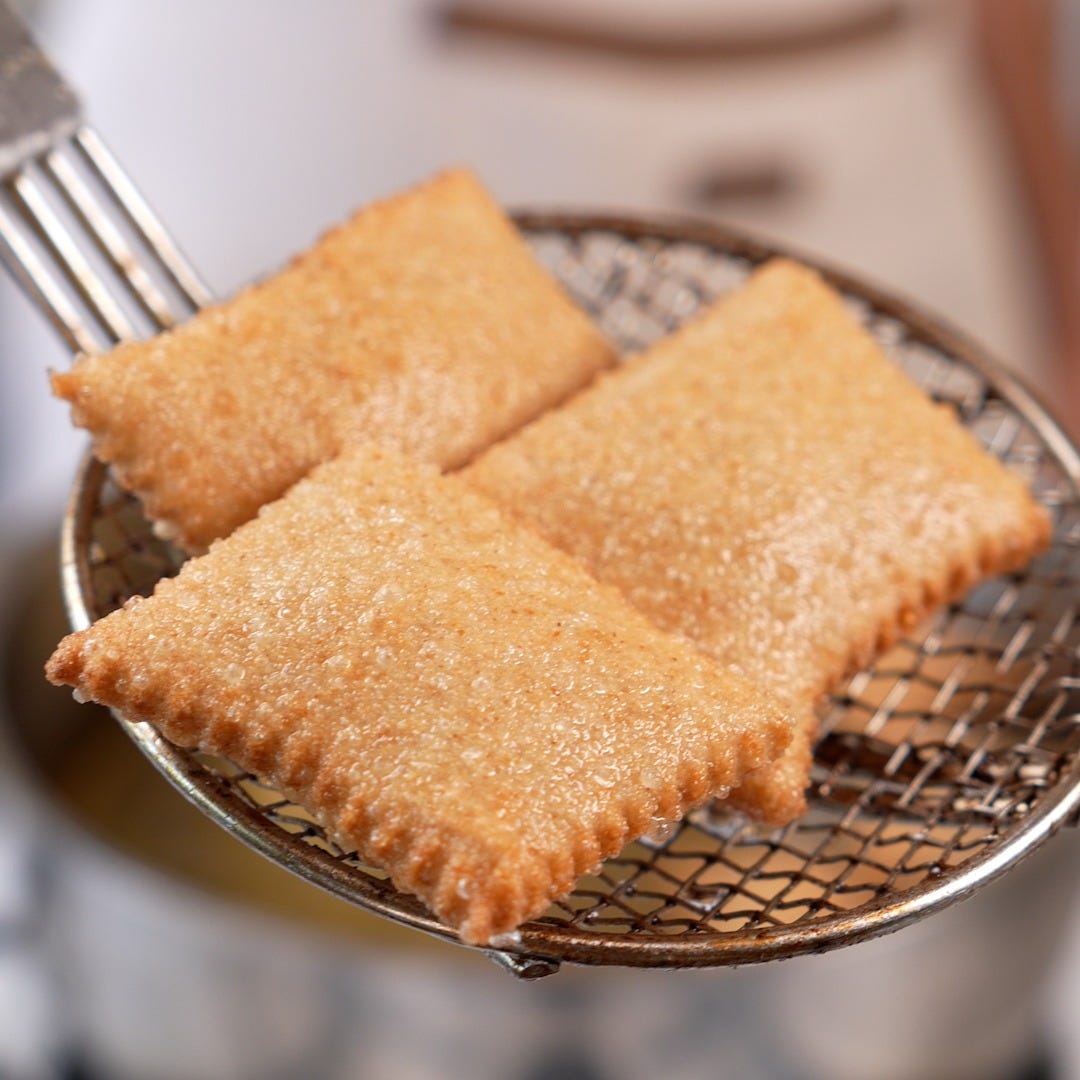
Chisolini
Where bread learned to fry in hot lard and laughter

You know a dish is loved when every town insists it invented it. In Pianura Padana, they call them chisolini, or gnocco fritto, or torta fritta, but the joy is the same: hot fried dough, puffed and golden, shared from one basket. For me, this dish shows what the Emilian table does best, turning simplicity into celebration.
In Emilia, bread doesn’t always come out of the oven. Sometimes it rises straight from hot fat, light as air and golden at the edges. These are chisolini, the little fried breads that appear before every meal, carried to the table in warm baskets lined with cloth. They arrive beside wine and laughter, torn by hand and filled with slices of prosciutto or melting cheese. They’re not fancy, but they’re unforgettable.
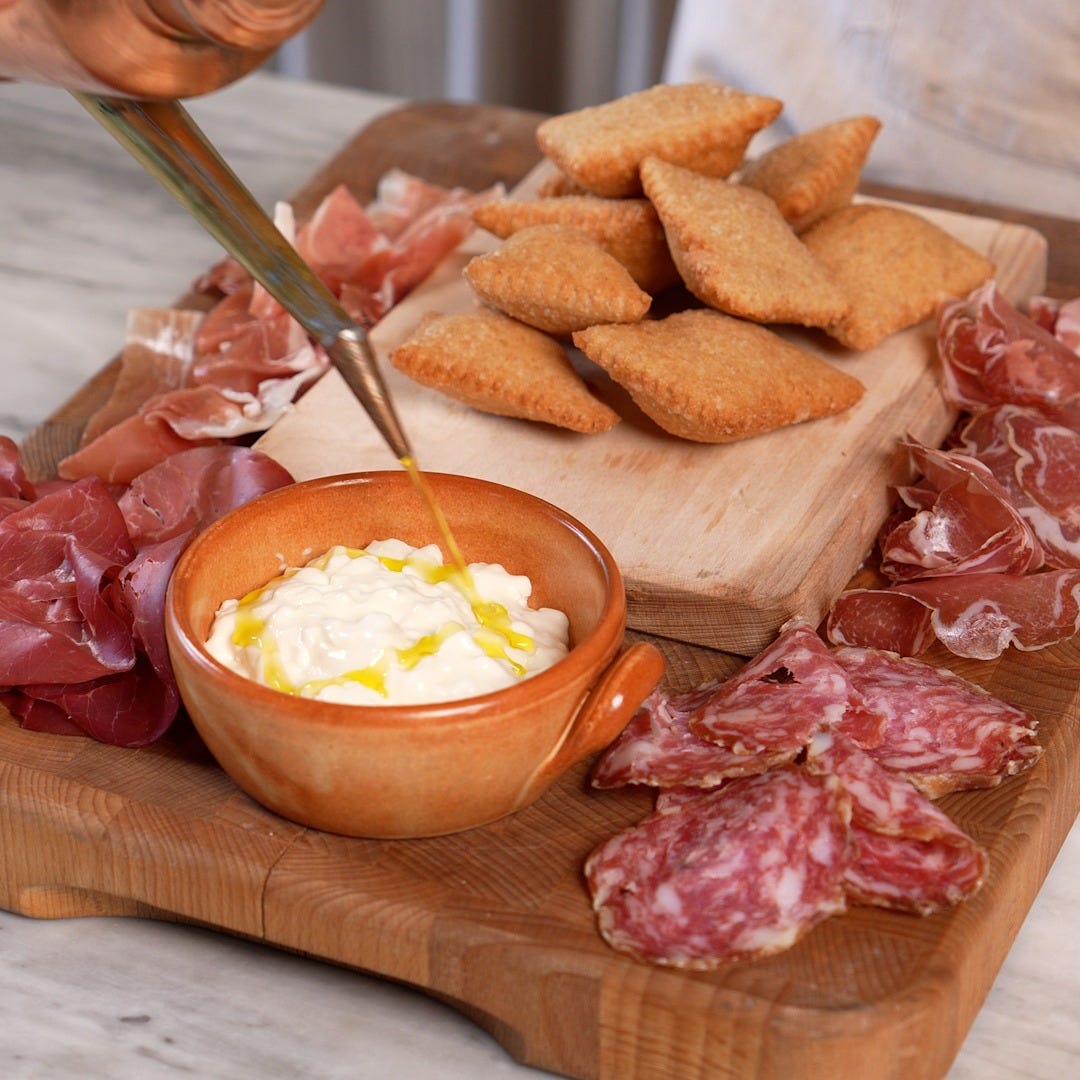
I first met them about 15 years ago in Verona, when friends invited me out for gnocco fritto. I remember thinking, “How can gnocchi be fried?” What arrived was a revelation: a basket of crisp, hollow squares with a mountain of salumi, squacquerone, and pickles on the side. Later, I learned that every province gives them a different name: gnocco fritto in Modena, torta fritta in Parma, crescentine in Bologna, chisolini in Piacenza, but they all mean the same thing: survival turned into joy.
Their story belongs to the countryside. When communal ovens were far and time was short, people fried leftover bread dough in lard at home, using only a pan and fire. It was the simplest bread there was, born from necessity and still carrying that humble pride. Making them today brings that feeling back on how flour, water, and fat can become comfort, and how sharing them turns any afternoon into a feast.